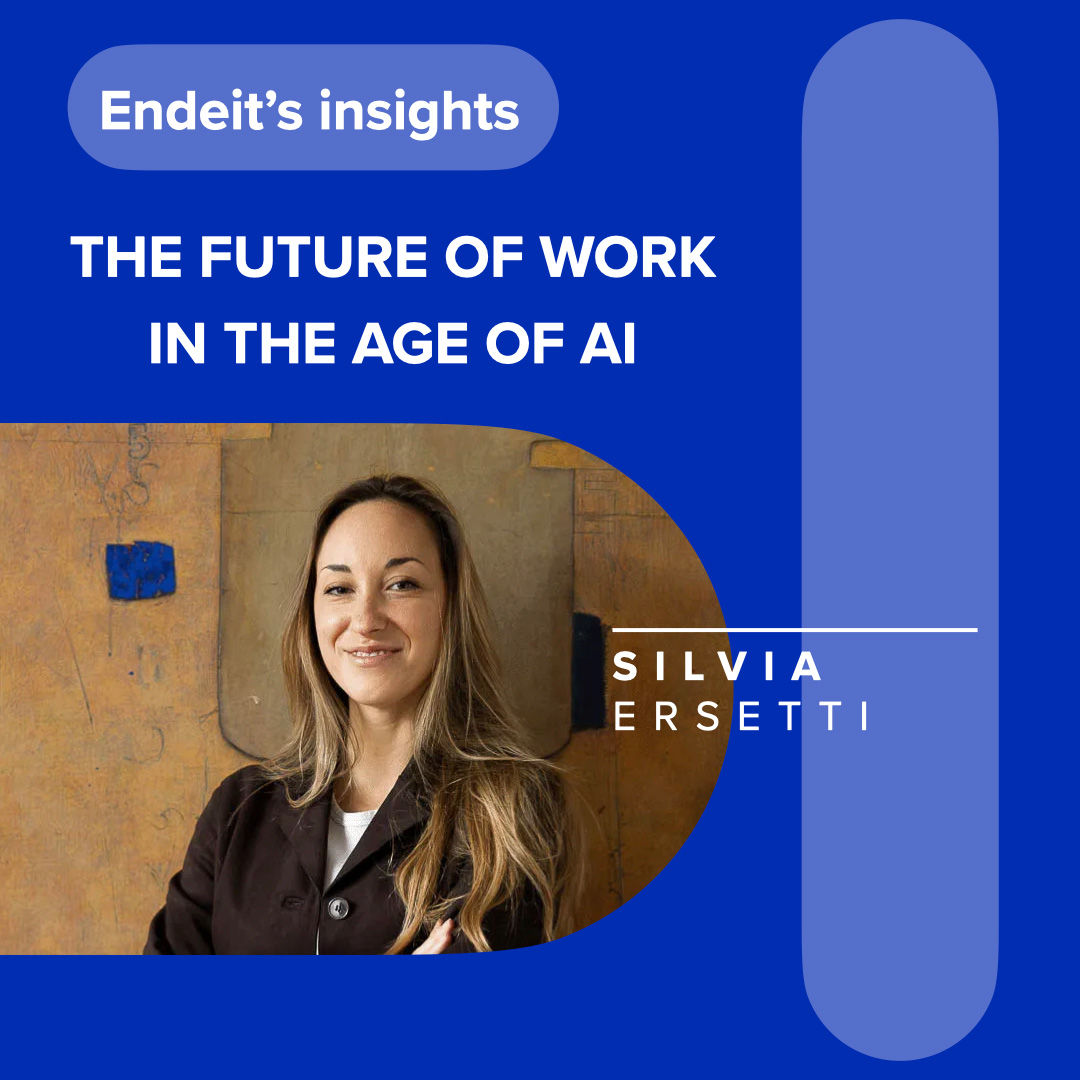
The conversation around AI and the world of employment often swings between utopia and panic. But according to Silvia Ersetti, who focuses on this topic as a member of Endeit’s Future of Work team, the reality will be far more nuanced, and uneven. She sees a labour landscape being reshaped not just by technology, but by regulation, demographic shifts, entrepreneurship, and changing cultural expectations around work itself.
What does the ‘Future of Work' look like: Will AI be a trainer, enabler, or ultimately a substitute for workers?
I think the reality is much more nuanced than people think. There are still huge industries that aren’t even digitised yet, so the impact of AI won’t happen evenly across the workforce. We’re talking about very different experiences for white-collar workers, blue-collar industries, freelancers, and solopreneurs. Everyone will be affected differently.
There’s also a tendency right now, especially in the venture capital bubble, to overestimate the speed of adoption as we have to be ahead of the story. Historically, a lot of industries move very slowly, particularly sectors tied to physical infrastructure or frontline labour. It will take time before AI can actually work effectively and efficiently across every industry.
At the same time, there are major labour shortages in certain sectors. If you look at frontline workers in construction or skilled trades, there’s a critical shortage of professionals. A lot of that physical work simply can’t be substituted.
In some cases, scarcity will drive wages upward because the demand for human expertise will remain high. So, the future of work won’t be a universal replacement story - it’ll be much more uneven and horizontal depending on the industry, the market structure, and the type of labour involved.
What shifts do you think will most define the future workforce?
One of the biggest shifts is the move toward entrepreneurship and independent work. We’re already seeing multiple trends merging together: more freelancers, more solopreneurs, and more people setting up their own companies. I think entrepreneurship will increasingly become a preferred path for younger generations compared to traditional employment models.
You’ll also see entire ecosystems emerge around supporting this way of working: platforms, tools, and companies designed specifically to enable independent workers and founders.
I think more graduates will choose to build something themselves rather than go for the traditional corporate career.
What’s interesting is that startups are already acting as prototypes for the future of work because they’re structurally much more agile. In many ways, they’re incubators for how work will evolve more broadly.
I also think companies themselves will increasingly become providers of education and mentorship, and post-university learning will become much more important than it is today. Organisations will create training ecosystems that become alternatives to traditional ‘credentialled’ paths like MBAs.
What skills or qualities do you think will become most valuable in the AI era?
Education will increasingly be about becoming AI-fluent, with a deeper focus on training your mind to work with these tools effectively rather than mastering one specific tool, as the technology is evolving quite literally every single day.
What’s interesting is that the market already increasingly rewards people who are more unique. Generalists have a huge advantage because they can move across disciplines and adapt more easily - If you can only do one thing, your value can be taken away very quickly.
The people who will thrive in particular are those who have unique skills combinations.
In Italy, where I’m from, education is quite traditional in that you study a subject that will then become your formal career. You don’t get to explore your passions. I think people now have more freedom to build careers around their actual strengths and interests rather than making themselves fit into a pre-defined role or career path.
Students have a real opportunity to develop themselves as people and follow what they’re genuinely drawn to. That individuality will become a unique advantage.
How do you think leadership inside companies will change?
We’ll see a shift in how organisations define power and leadership. Historically, status inside companies was often measured by how many people you managed. But as AI reduces the need for large operational teams, those structures will change.
Senior people may end up working much more independently inside organisations. Instead of managing large departments, they’ll become ‘individual contributors’, owning a specific function with most of the work being done independently rather than as teamwork.
So, the role shifts from being a manager to being an owner. I think that changes organisational culture quite significantly because leadership becomes less about hierarchy and more about accountability, strategic oversight, and autonomy.
What do you think people misunderstand most about the future of work?
The biggest misconception is probably that we’ll all work less. In some industries, there may be short-term productivity gains that reduce working hours, but the future of leisure is actually a much longer societal conversation. It depends entirely on how society reorganises itself around work, and those shifts take time.
In knowledge-work specifically, I do think we’ll see fewer entry-level jobs because AI will absorb many junior-level tasks. That means climbing the ladder could become more competitive at the beginning of your career.
But there’s also a more positive side to this.
AI and HR technology are creating much more skills-based recruiting and assessment systems, which could lead to a stronger meritocracy. Companies will increasingly hire based on demonstrated capability rather than purely traditional credentials.
I also think companies themselves will evolve culturally. Burnout is already such a huge issue, so organisations will have to pay much more attention to how work actually feels for employees.
Yes, there may ultimately be fewer positions to apply for, but companies will also have to compete much harder for the right candidates. Employment itself has to become more attractive.
So, if you’re entering the workforce now, I think the most important thing is to lean into what genuinely feels true to you as a person. Your individuality will set you apart and that will become more valuable over time.